


17 November 2026
But only two wind farms approved in Q3 as backlog grows
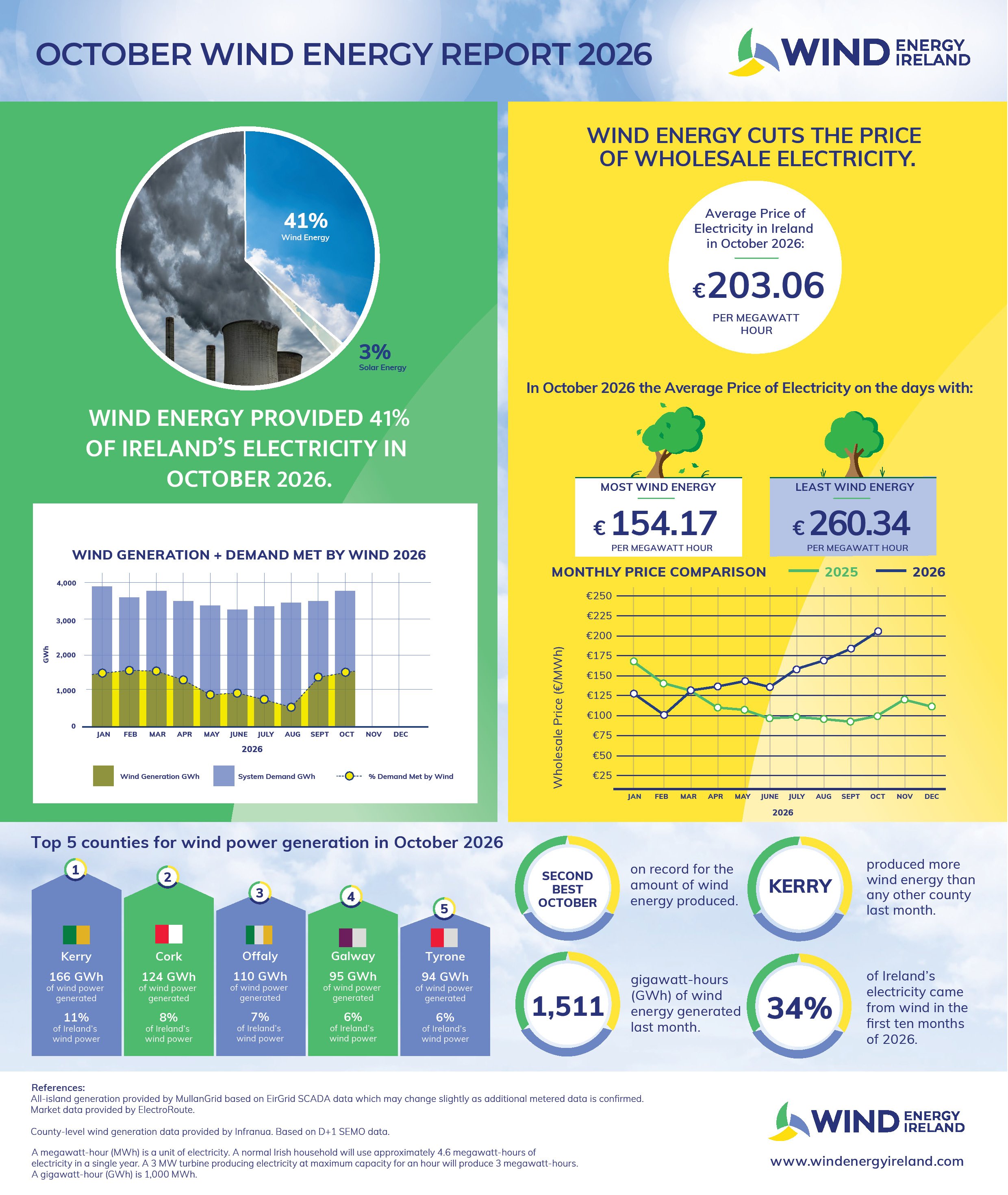
17, November 2026: Soaring gas prices meant that wholesale electricity prices in October were two-thirds higher on the days the system was forced to rely on imported gas compared to days when wind farms pushed gas off the system.
The average wholesale price last month was €203.06 – rising for the fourth consecutive month – but on days with the most power from Irish wind farms this dropped to €154.17, rising 69 per cent to €260.34 on days when the system chiefly ran on gas.
Noel Cunniffe, CEO of Wind Energy Ireland said: “At a time when rising gas prices are pushing up electricity prices for consumers, wind farms are generating home-grown power and reducing our dependence on imported fossil fuels.
“But we’re facing twin problems of not having enough wind farms while also being unable to get the most out of the projects we do have.
“Last month was the second-best October on record for the amount of electricity our wind farms produced but across the island of Ireland it was the worst month ever for the amount of electricity we lost because the grid wasn’t able to take it.
“Every time we have to turn off or down a wind farm we’re seeing expensive gas generation coming onto the system and hurting the pockets of Irish consumers.
“Reinforcing the grid is critical in the medium to long term but, right now, we need to see reducing wasted wind energy at the top of the agenda and more urgency in rolling out solutions like enabling wind farms to co-locate with batteries. This would mean we could store clean, affordable, power instead of seeing it go to waste.”
Planning decisions
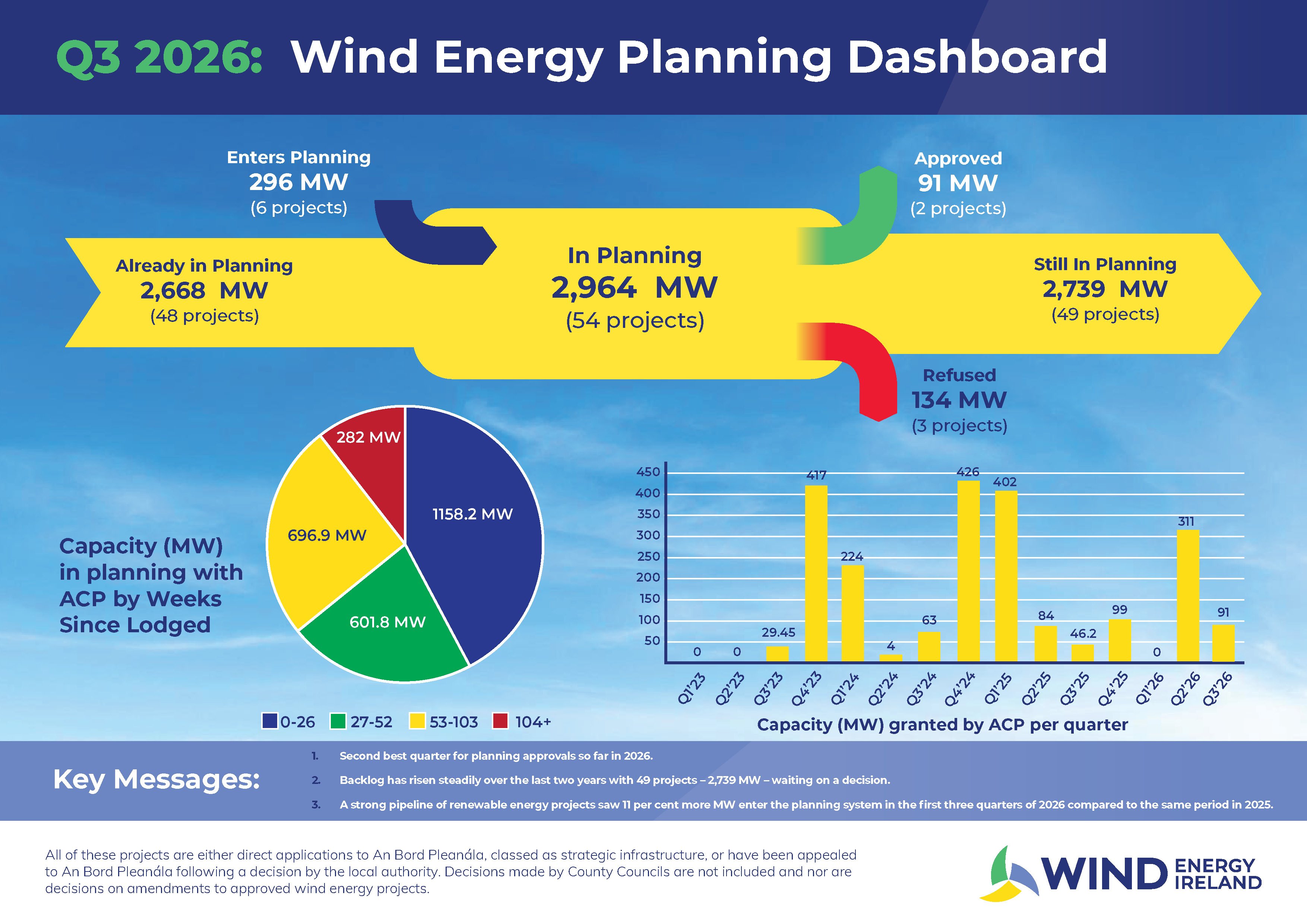
The backlog of wind energy projects awaiting decisions from An Coimisiún Pleanála continued to grow in Q3, increasing slightly compared to the previous quarter.
There are now 49 projects, representing 2,739 MW of potential renewable energy capacity, awaiting decisions. That is up more than a quarter from 39 projects (2,127 MW) in Q3 2025.
Only two wind energy projects secured planning approval in the third quarter of 2026. Together, the approved projects will deliver 91 MW of new generation capacity, enough to power more than 50,000 homes a year.
Noel Cunniffe, CEO of Wind Energy Ireland said: “The approval of new wind farms is always welcome. Each project will strengthen our energy security and help deliver clean, affordable power for communities across Ireland.
“But it is disappointing that fewer wind farms were approved in Q3 than in the previous quarter. We are getting a trickle of the projects we need out of the planning system every quarter and the backlog of projects continues to increase. We need to build momentum in the planning system, not lose it, if we are to deliver the renewable electricity Ireland needs.”
Strong pipeline despite planning backlog
While the backlog remains a challenge, there are positive signs for the pipeline ahead. In the first three quarters of 2026, 11 per cent more MW entered the planning system compared to the same period in 2025.
Noel Cunniffe continued: “The strong pipeline of new wind farms is a positive sign and shows that developers are ready to invest in helping to build an Irish electrostate.
“But getting projects into the planning system is only the first step. We also need to get them through it and connected to the electricity grid. With 49 wind energy projects now awaiting decisions, tackling the backlog must be a priority if we are going to turn this pipeline into new wind farms producing clean power for Irish homes and businesses.”
Kerry leads the way again
Kerry led Ireland in wind energy generation in October, producing 166 GWh of electricity. It was closely followed by Cork (124 GWh), Offaly (110 GWh), Galway (95 GWh) and Tyrone (94 GWh).
Noel Cunniffe concluded: “If we want to deliver more affordable, secure and clean electricity, we need to get more wind farms through the planning system and into construction. That is why tackling delays and ensuring the planning system can deliver at the pace required is so important.”


